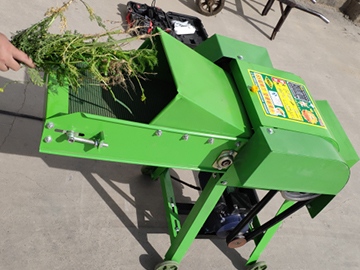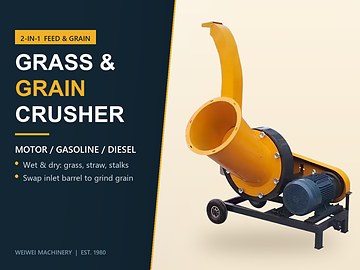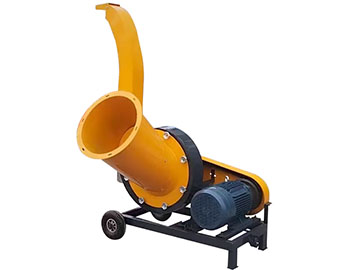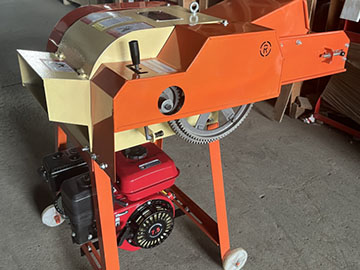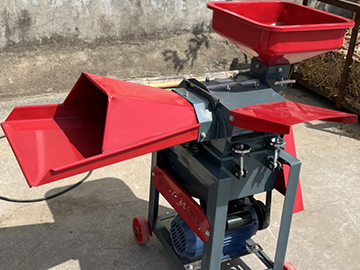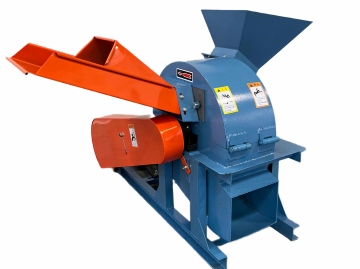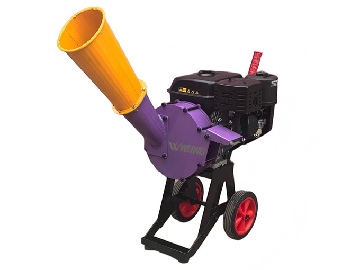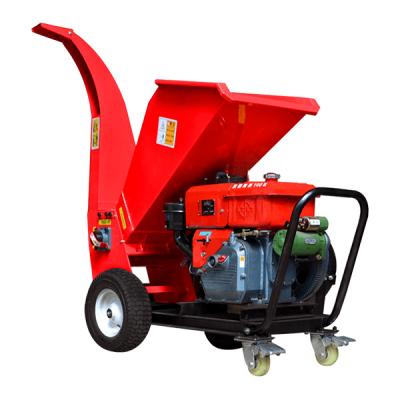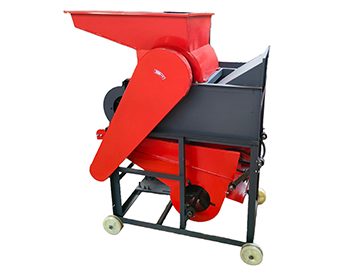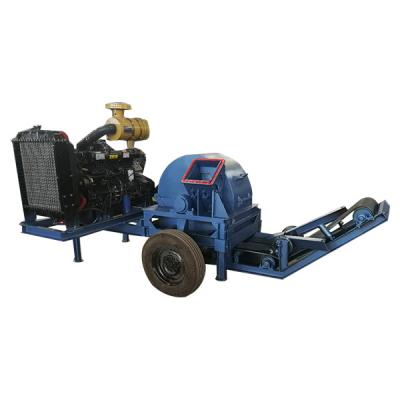

The 9ZF-400 series is arranged to do both without changing the machine. Material enters at the hopper, is caught by the rotating assembly and thrown against the body wall until it is smaller than the screen opening; from there it drops through the 3 mm screen into the powder chamber and leaves at the bottom outlet. Material that is only cut and not ground is carried by the airflow out of the top discharge port. In practice the operator decides which product he is making by fitting or removing the screen: with the screen in, the machine is a hammer mill; with it out, it is a chaff cutter with a fan attached. Sharpening and turning the 65 manganese blades and the sawtooth hammers are the only routine jobs, and both are double sided, so a worn edge costs nothing but ten minutes.
Rotor diameter is 360 mm across the range and the shaft runs at 3100 r/min, which is why output climbs so steeply between models while power stays the same. The 20C with 16 hammers puts out 200 to 400 kg/h; the 24B and 24C with 24 hammers both reach 400 to 600 kg/h; the 30 model, with 24 or 32 hammers, is rated 600 to 800 kg/h. All four are powered by the same 2.2 to 3 kW motor, and all four weigh between 55 and 80 kg, so a single person can move one on the frame wheels. Buyers who expect to grind maize grain as well as straw should take the 30, because the extra hammers keep the tip speed up when the material is dense.
The limit is moisture and stone. Straw above about 20 percent moisture will blind a 3 mm screen within minutes, and any sand picked up from the field will take the edge off a hammer set in a single afternoon. Feeding off a concrete pad rather than off the field floor solves the second problem for almost nothing.
Zhengzhou Weiwei Machinery has manufactured forage and grain machinery in Henan since 1980. Machines carry CE marking and are built under an ISO 9001 system in a plant producing 40,000 to 50,000 units annually, with more than 200 sales outlets inside China and exports to around 40 countries. Ask for the model that matches your motor and your material on WhatsApp +8613526462915, or by email at admin@weiweimachinery.com; specifications for the whole range are at www.weiweimachinery.com.