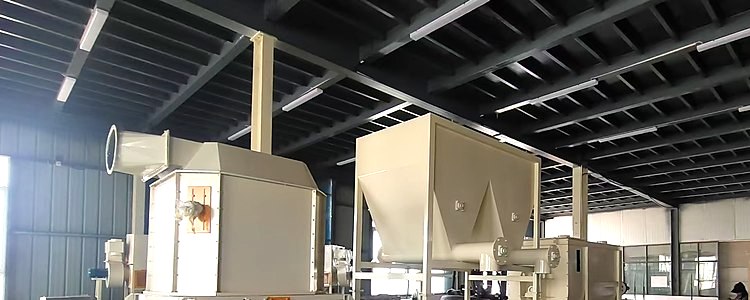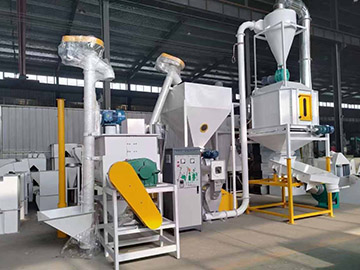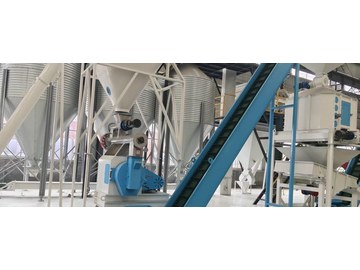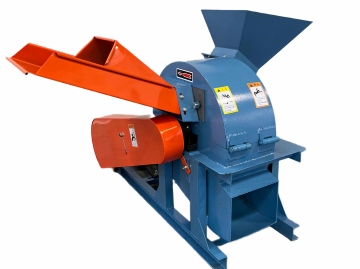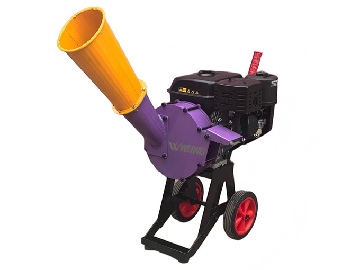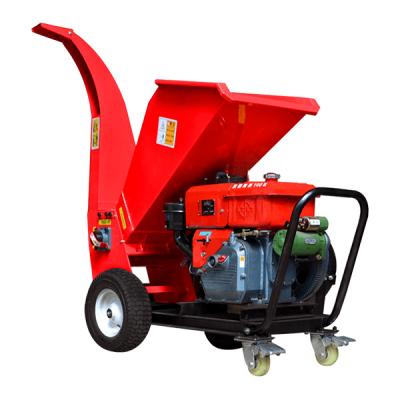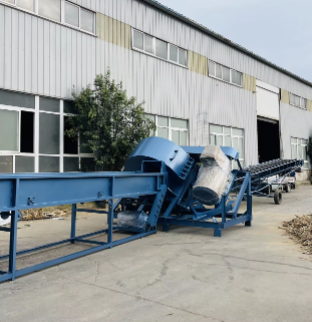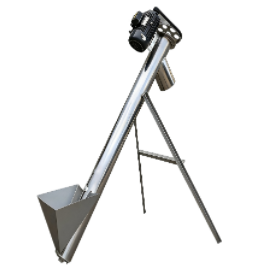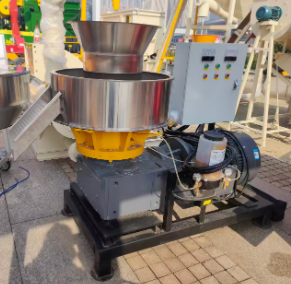

A complete line is a chain of cycle times, and the slowest link sets the output. Ours are built as intake hopper and screw conveyor, hammer mill with cyclone, horizontal double-shaft paddle mixer, buffer bin above the press, ring die pellet machine, counter-flow cooler, crumbler and screener, then weighing and bagging. Every unit is chosen from the hourly tonnage and the formula, not from a catalogue page.
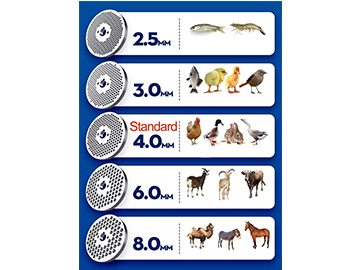
Three points decide the real tonnage. Grinding comes first: a 3 mm screen on dry maize gives fine meal that pellets easily, but the same screen on high-moisture or fibrous material can halve hammer mill output, so the moisture has to be checked before the screen is chosen. Mixing comes second: batch size sets how long the press waits between batches, and a mixer that discharges in two minutes into a press that needs four will starve it. Cooling comes third, and it is the one most often skipped. Pellets leave the die at 70–80 °C and soft; if the cooler's retention time and air volume are too small, they crumble in the bag and mould in the warehouse two weeks later.
Power and civil work are usually the surprise. A line is quoted with a total installed power, but many sites have a transformer sized for one machine. Send the voltage, phase and transformer capacity before the layout is drawn. Where the supply is weak we specify a soft starter, or a smaller main motor and accept lower tonnage, rather than sell a plant that trips the main breaker at start-up. Headroom matters too: the buffer bin sits above the press, so the shed needs clear height for the elevator, and the cooler needs air in and air out.
Zhengzhou Weiwei Machinery has been building feed and biomass equipment since 1980, with CE and ISO9001 certification and both complete lines and single machines shipped to Africa, Southeast Asia, South America and the Middle East.
Send us your hourly tonnage, the formula (poultry, cattle, fish or shrimp), the raw material and its moisture, and the site voltage. We will return a stage-by-stage layout with the equipment list, so you can compare the line as a whole instead of comparing one press against another.