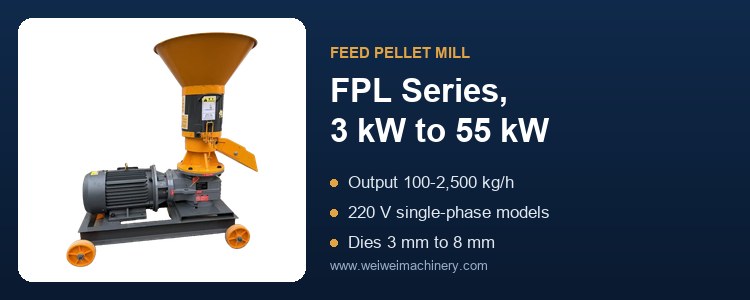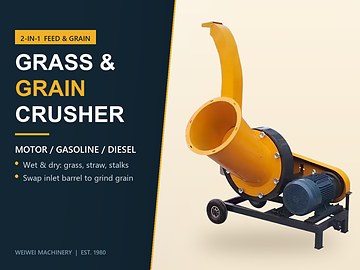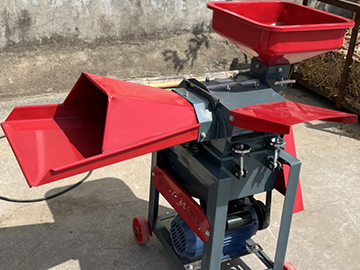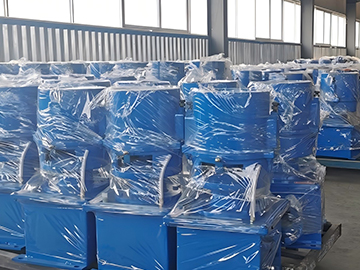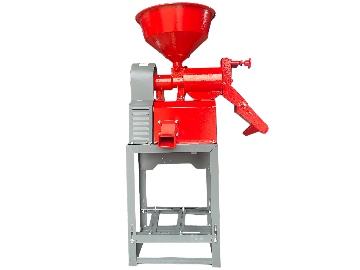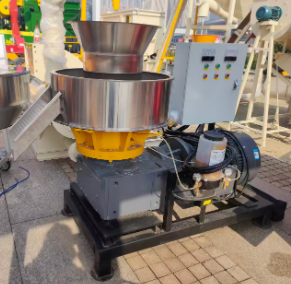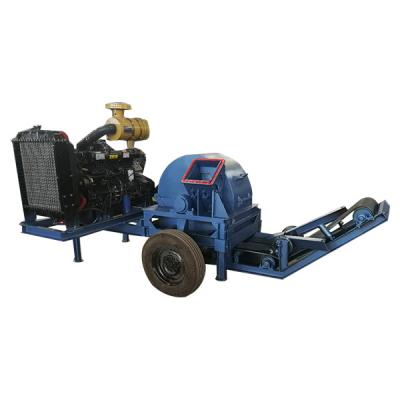

The flat-die press is the version that fits a farm rather than a feed mill. Material falls from the hopper into a chamber where two or three rollers run over a horizontal perforated die; the rollers push the mix through the holes and the pellets are cut off by blades on the outside of the die. Cold pelleting like this needs no boiler and no steam — the heat comes from friction in the die, and a little water added to the mix does the rest. Everything visible, everything serviceable with a spanner, and a die that can be changed in minutes when you move from poultry to pig feed.
Power is the first decision. The FPL150, 160 and 180 run on 3 to 4.5 kW single-phase 220 V and make 100–250 kg/h, which suits a farm with a few hundred birds or a small pig unit and no three-phase line. From the 210 upwards the range is three-phase: 7.5 kW for 250–350 kg/h, 11 kW for 300–400, 15 kW for 500–600, 22 kW for 800–1,000, and 37 or 55 kW for 1.5–2.5 t/h where the farm is also selling bagged pellets locally. Every model is available with a reduction gearbox drive, which is the version to specify if you want a slow, quiet die and a motor that is not working at its limit all day.
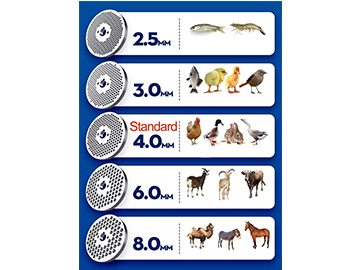
The die is the second decision, and it is the one buyers most often get wrong. Hole diameter should follow the animal, not the machine: 3–4 mm for poultry, 4–6 mm for pigs, 6–8 mm for cattle and buffalo. A chick ration is usually run at 3 mm and then crumbled. Moisture in the mix wants to be around 15–17 % for cold pelleting — drier and the pellets crumble in the bag, wetter and the die blinds and the mill labours. New dies also need a bedding-in period on an oily or high-starch mix before they will press a hard pellet.
Zhengzhou Weiwei Machinery has been manufacturing feed and biomass machinery since 1980, with CE and ISO 9001 certification. Send us the ration, the animal and the kilos per hour you need, and we will size the motor and the die together and quote the spare die with the machine, because a second die costs far less now than a stopped mill later. Full specifications are on www.weiweimachinery.com.