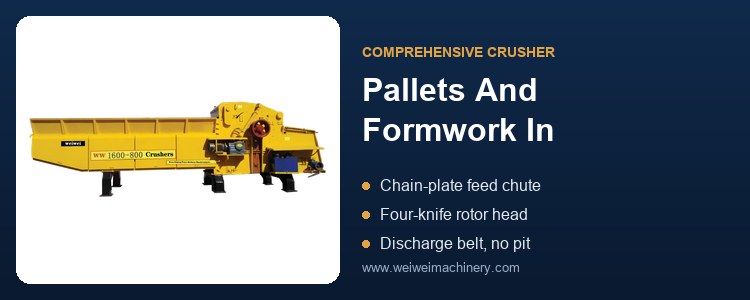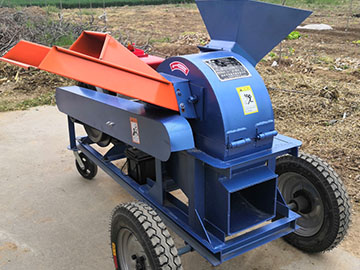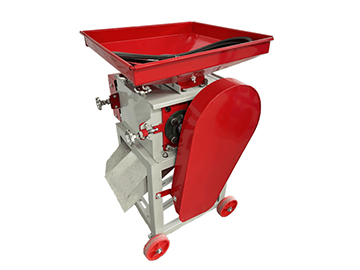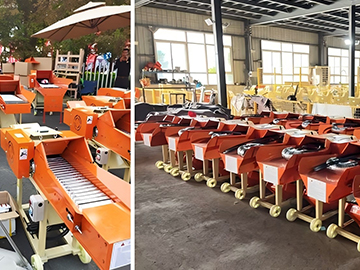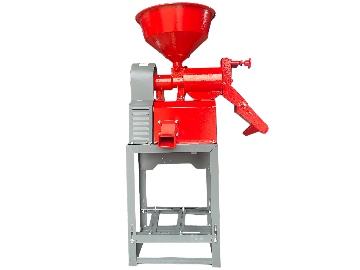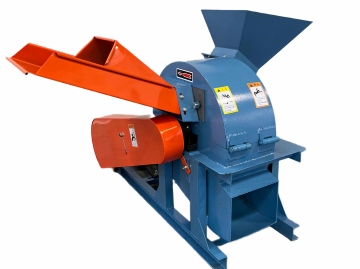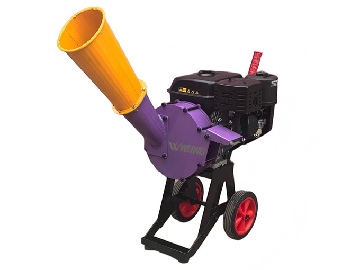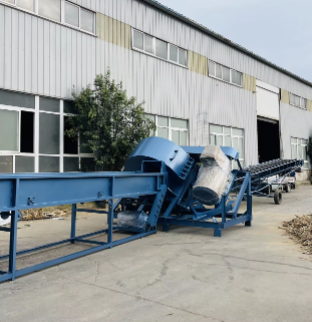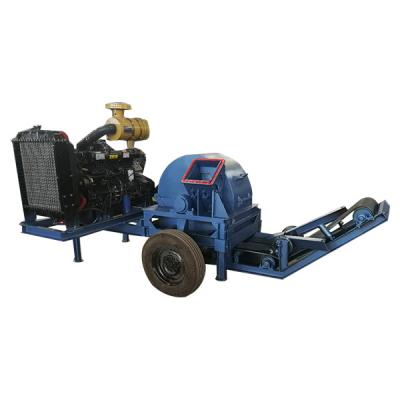

A comprehensive crusher is built for exactly this kind of unsorted feed. Instead of a small hopper and a gravity chute, the machine carries a chain-plate conveyor that forms the floor of a long feed chute. Material is tipped or forked in at the low end at full length, and the chain plates carry it forward into the rotor. Because the chute is open along its whole length, a pallet with nails, a bundle of formwork or a 1.5 m log all travel the same way and reach the knives at the same controlled speed. Nothing has to be cut down first, and nobody has to stand at a hopper pushing material in with a pole.
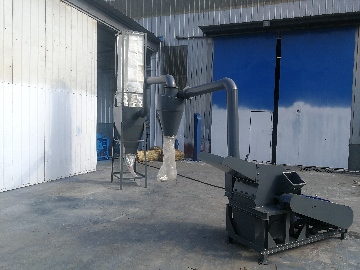
The rotor carries four knife holders on a heavy shaft, and the knives shear rather than mash. That difference matters in the fuel trade: a shear produces blocky chips with a fairly even length, while a hammer mill produces a fluffy mix with a high proportion of fines. Chips are what a boiler or a gasifier can actually burn, and fines are what gets blown out of the furnace or clogs the feed screw. Under the rotor a discharge belt takes the material straight out to a stockpile or into a trailer, so the machine can sit on a flat concrete slab. No pit, no elevator, no separate conveyor to buy.
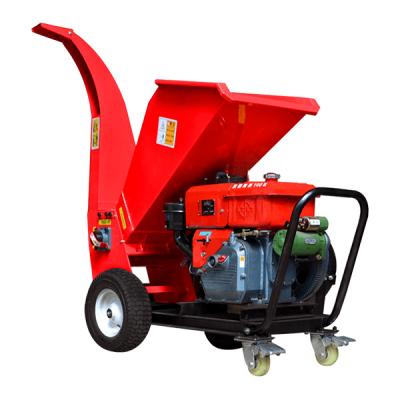
Drive is by electric motor through a V-belt to the rotor pulley, which keeps the motor off the rotor shaft and makes belt changes a five-minute job. The whole unit sits on a skid frame on four legs, so it can be loaded complete onto a flatbed; for yards that move between sites, the same frame can be built as a trailer with a diesel engine and no cable at all. Blades are bolt-on and reached through a side cover, which is the detail that decides your maintenance cost — a knife that needs half a day to change will not be changed.
Zhengzhou Weiwei Machinery has been building wood and biomass machinery since 1980, with CE and ISO 9001 certification behind every unit. Output depends entirely on what you feed and how wet it is, so we do not quote a single tonnage figure: send us photos of your pile and the fuel size your boiler asks for, and we will run the numbers with you and send a video of the machine on comparable material. Details are on www.weiweimachinery.com.