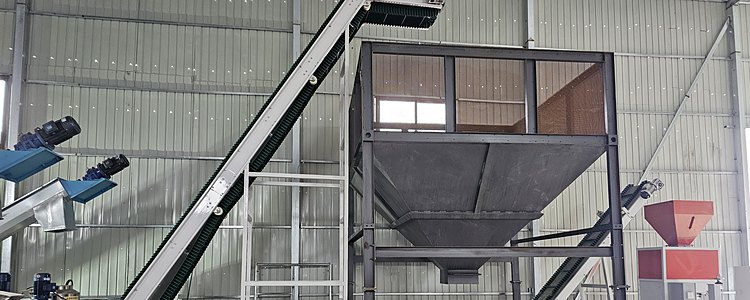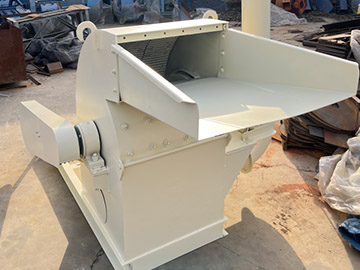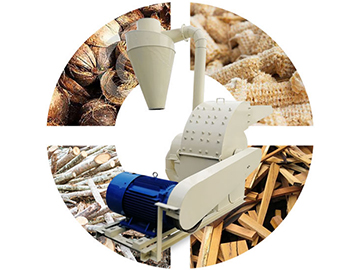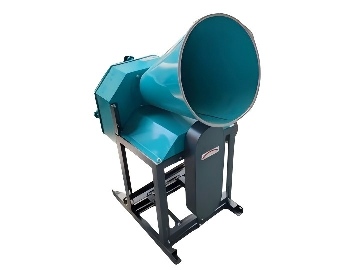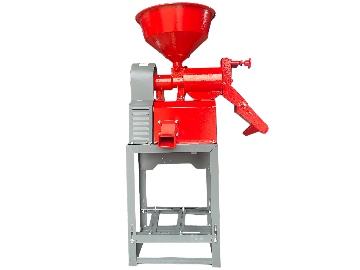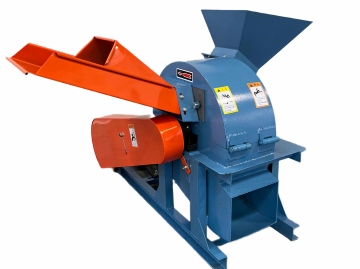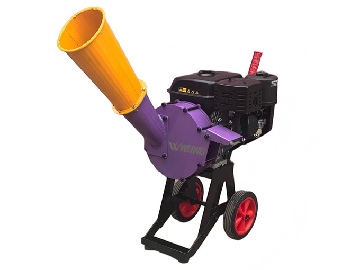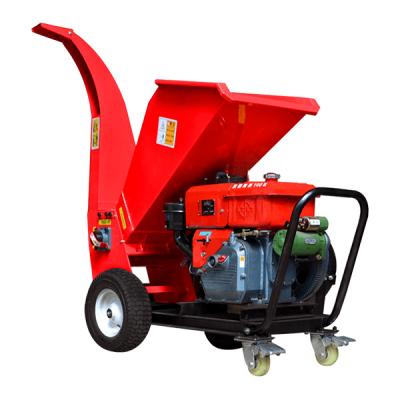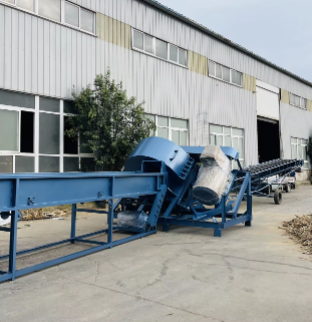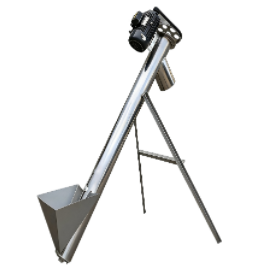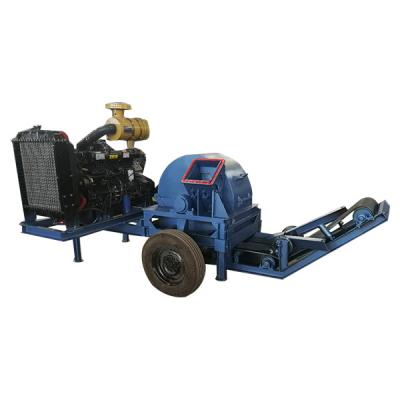

The line starts at reception, where raw material is tipped and carried up by an inclined belt conveyor. From there the material goes to grinding — a hammer mill with a cyclone on top, which does two jobs at once. It brings sawdust, chips and shavings down to the 3–5 mm particle size a die can press, and the cyclone pulls the dust out of the air stream and drops it into the outlet instead of leaving it hanging in the shed. A mill without that cyclone will coat the roof beams in a week and lose a measurable share of the product out of the vent.
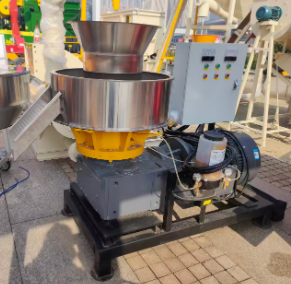
Then comes the stage that decides whether the press runs smoothly: the buffer bin. It is a steel bin standing above the press, filled from the top by a vertical or inclined conveyor and discharging by gravity through a controlled outlet into the die chamber. Its job is to absorb everything upstream — a truck arriving late, a mill running faster than the press, a change of material — so that the press always sees a full, even feed. Run a press straight off a conveyor with no bin and every hiccup upstream arrives at the die as a surge or a gap, and both cost you: a surge chokes the die, a gap lets the rollers run dry and glaze it.
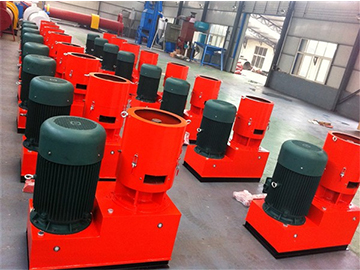
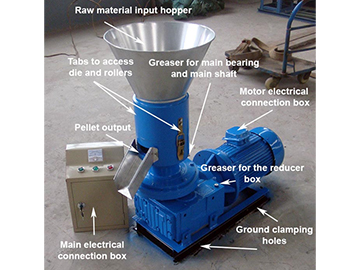
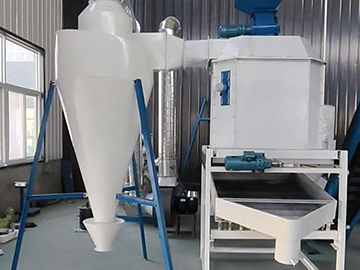
Under the press, the finished pellets go through cooling and screening and then to bagging, with the fines returned to the bin rather than sold. Each section carries its own control panel, which matters more than it sounds: when the press trips at two in the morning, an operator can isolate that panel and keep the conveyors running instead of shutting the whole plant down to find one fault.
Zhengzhou Weiwei Machinery has been building biomass and feed machinery since 1980, with CE and ISO 9001 certification, and we design the layout around the shed you actually have. Send the material, its moisture and your target tonnage per shift, and we will send a stage-by-stage layout with the conveyor lengths and bin size worked out before you commit to a mill. Full details are on www.weiweimachinery.com.