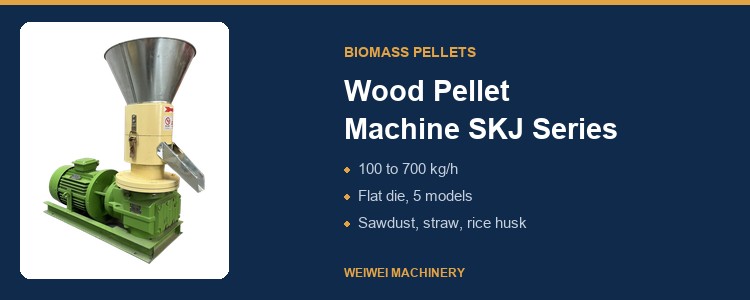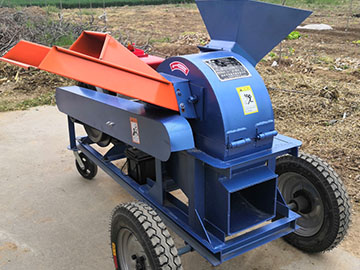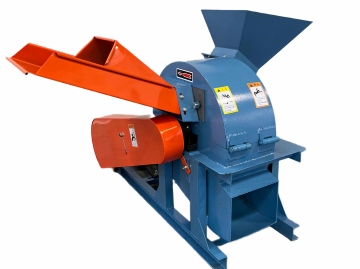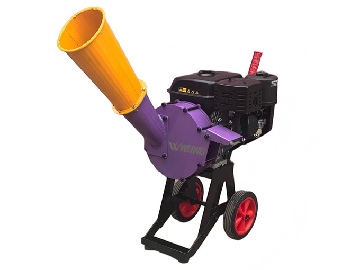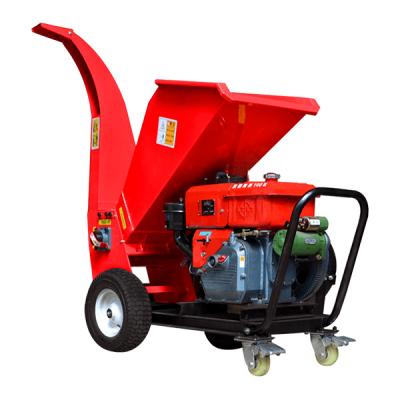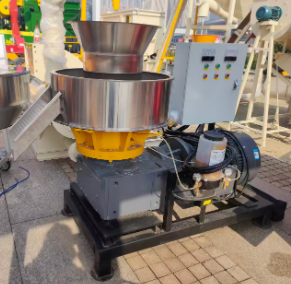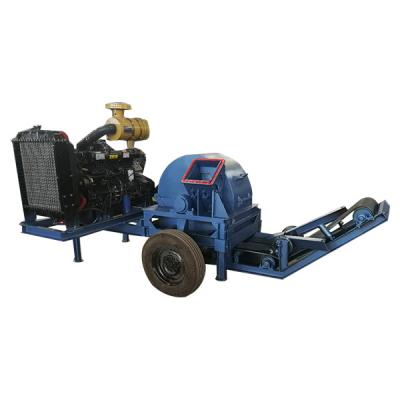

The SKJ range runs from the SKJ200 at 7.5 kW and 100-120 kg/h up to the SKJ450 at 45 kW and 600-700 kg/h, all flat die, all with two rollers running on the die face. The small end is a farm or workshop machine that runs on a domestic supply; the SKJ450 is a small commercial line that needs a proper three-phase supply and a cooling area.
Flat die geometry is what makes the range flexible. Material is pushed by the rollers from above into the holes, and the die thickness relative to the hole diameter, the compression ratio, is what builds pressure. Soft, low density material such as rice husk or straw needs a high ratio to reach density; clean pine sawdust needs less, or the die plugs and the rollers skid. That is why we ask for the material before quoting a die, and why a spare die is often a better second purchase than a bigger motor.
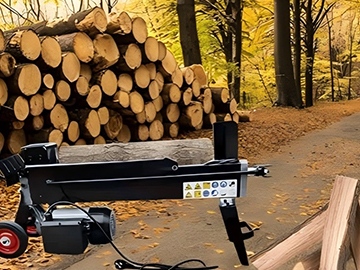
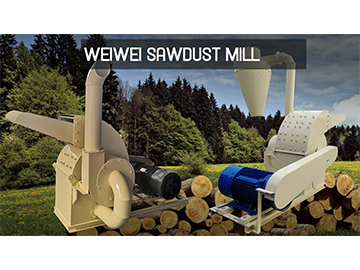
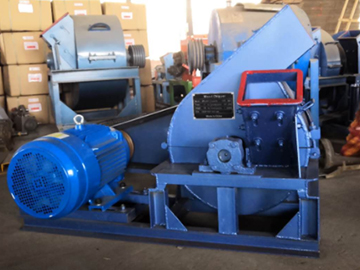
Three conditions sit in front of the die. Particle size: sawdust ground to 3-5 mm presses evenly, while long shavings bridge in the chamber and punch through in lumps. Moisture: 12 to 15 percent is the window, and on the wet side the pellets come out soft and steam in the box. Feed rate: the motor tells you when to stop pushing, because a machine fed too fast drops below working temperature and the pellets crumble.
After the die, the pellets still have to cool. A small line usually spreads them on a mesh floor for twenty minutes before bagging; a commercial line uses a counter-flow cooler. Bagging hot pellets is the most common reason a good batch arrives at the customer as fines.
The SKJ series is used on sawdust, wood shavings, straw, rice husk, peanut shell and palm fibre, usually feeding a small biomass fuel or bedding business. Zhengzhou Weiwei Machinery has been building this equipment in Henan since 1980, with CE and ISO9001 certification, and we match the die to your material before the order rather than after the first complaint. Send the material, its moisture and your target tonnage through the website and we will specify the model and the die.
If you need any assistance, you can contact our company via WhatsApp at +86 13526462915 to obtain the quotation.