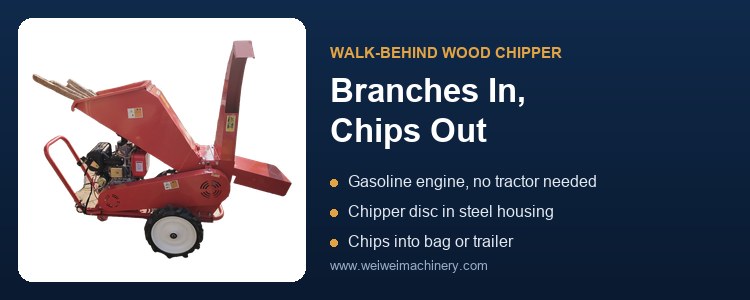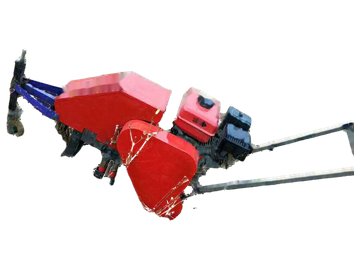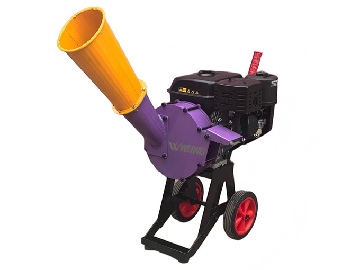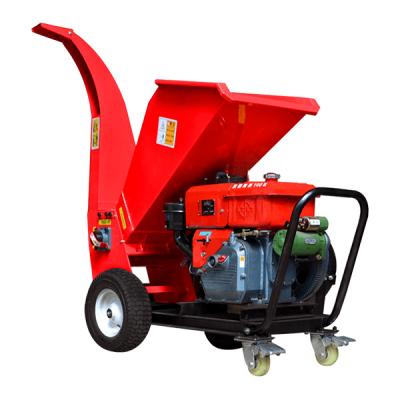

The tractor-mounted chipper does that job well — if you own a tractor, if it is free in pruning week, and if the trees are laid out so a tractor can reach them. Most smallholdings fail at least one of those tests. A walk-behind chipper has its own gasoline engine, two wheels and a handle, so it goes where the prunings are, including between rows, into a walled garden, or onto a trailer at the end of the day.
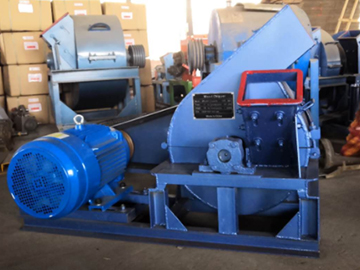
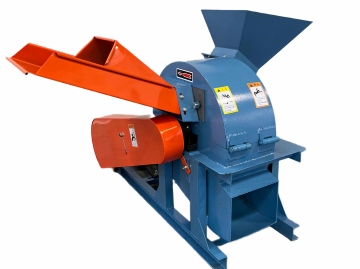
The working parts are few and visible. Branches drop into a wide feed hopper that is shaped to guide them in at an angle rather than straight down, which is what keeps the operator's hands away from the cutting zone. Inside, a heavy steel disc carries the knives and spins in a closed housing; a guarded belt drive links the disc shaft to the engine on the same frame. Chips leave through a discharge chute aimed at a bag, a barrow or the back of a truck, so one person can chip and collect at the same time. Nothing on the machine needs a PTO, a three-point linkage or a second operator.
What decides whether it pays for itself is not the engine size but three habits. Feed the machine at the rate it will take, not the rate you want — forcing long branches stalls the disc and burns the belt. Keep the knife gap to the counter-blade correct, because a blunt or badly set knife tears the wood instead of cutting it and the chips come out as stringy mess that will not spread. And chip green or dry, but not half-dry: soft, fresh prunings cut cleanly, while material that has dried in the sun goes hard and blunts the edge quickly.
The output is worth more than the fuel it saves. Wood chips spread 50–75 mm deep under fruit trees hold moisture, suppress weeds and rot down into the soil; the same chips mixed with grass and kitchen waste make compost in a fraction of the time that whole branches would take. Landscapers sell the chips; councils use them on their own beds.
Zhengzhou Weiwei Machinery has been building wood and biomass equipment since 1980, with CE and ISO 9001 certification. Tell us the branch diameter you deal with, how many tonnes a season and who will be feeding the machine, and we will confirm whether this chipper or one of our tractor-driven models suits you. Specifications are on www.weiweimachinery.com.