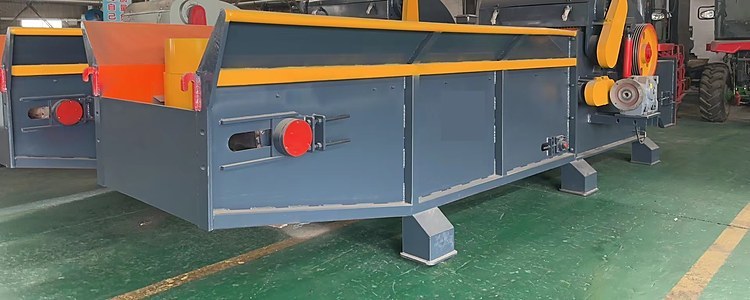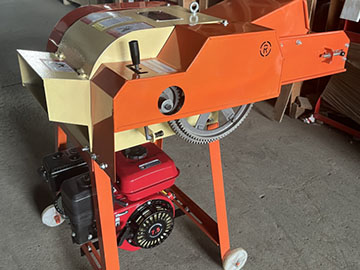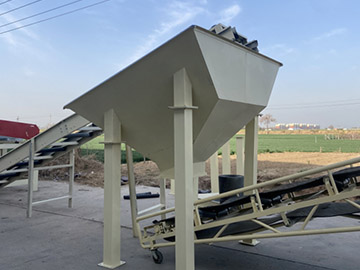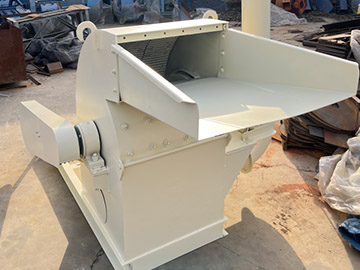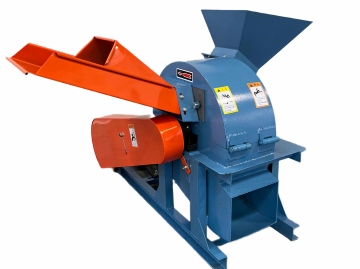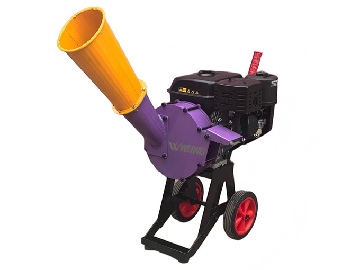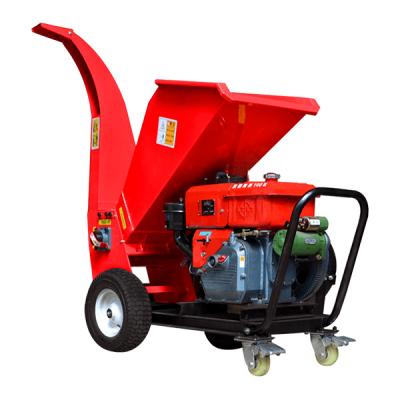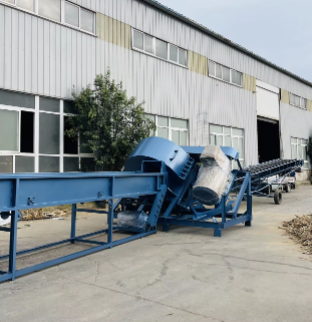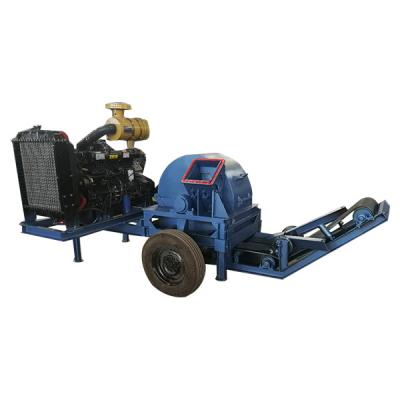

The cutting end of a shear-type crusher is a rotor, not a hammer. A forged rotor body carries flying knives bolted through the shell, and a bed knife bar is fixed under the rotor. Material arrives on a chain plate conveyor, a toothed press roller above the chain flattens the load so it cannot ride up, and the knives shear it against the bed knife. A grate or screen below sets the maximum piece that leaves the machine.
The knives are bolted rather than welded for one reason: they are consumable. Each knife usually carries two to four usable edges, so when the working edge rounds off the knife is unbolted, turned and re-torqued instead of being scrapped. A dull edge does not cut, it tears, and tearing costs power. That is the whole explanation for the current creep: the machine is being asked to do the same work with a blunt tool.
The bed knife gap is the second number that matters. Set too wide, material folds over the bed knife instead of being sheared, and the output turns stringy while the load rises. Set correctly, the knives cut and the current stays flat. Check it with a feeler gauge along the full length of the bar, because a bar that has shifted at one end gives a machine that cuts well on one side and tears on the other.
A workable schedule is short. Bolts and knife condition every day at the start of the shift, bed knife gap and knife seating every week, press roller teeth cleaned whenever the feed starts to slip, and the grate inspected for bent bars every time the material changes. Wire, stones and steel offcuts are what actually damage knives, so the upstream chain plate is worth watching as closely as the rotor.
Two habits save money here. Keep one spare set of knives on the shelf so a change never stops production, and record the date of every rotation on the machine — a rotor with a written history is a rotor that is never run to failure.
Zhengzhou Weiwei Machinery has manufactured biomass and feed machinery since 1980, is certified to CE and ISO9001, and supplies machines with spare knife sets and wear parts.
Send us the material you process and the output size your buyer accepts, and we will confirm the knife and grate configuration, plus the spare parts you should keep in stock.