
The most common mistake new poultry farmers make is choosing a pellet mill first and thinking about flock size later. It should be the other way around. A feed pellet machine is sized by how much feed you must produce per day, and that number comes straight from how many chickens you keep. Work backwards from the birds and the right machine size becomes obvious.
How much feed does a chicken actually eat?
Two figures are enough for planning. A laying hen (layer) eats roughly 0.11–0.13 kg of feed per bird per day — call it 0.12 kg. A broiler flock is all-in-all-out, so daily feed varies as the birds grow; over a typical 40–45 day cycle the average works out to about 0.09–0.11 kg per bird per day. Multiply by your flock and you get your daily feed demand. For example, 1,000 layers need about 120 kg/day, while 5,000 broilers need roughly 500 kg/day at peak.
Match feed demand to pellet mill capacity
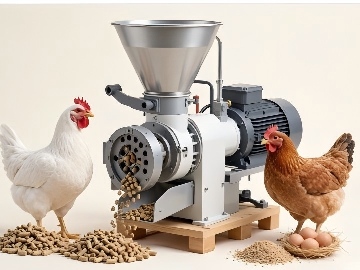
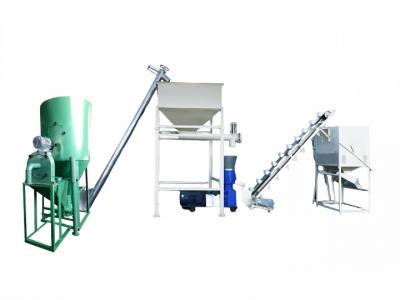
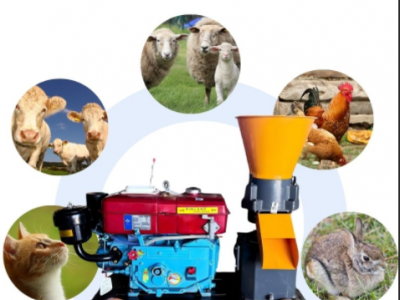
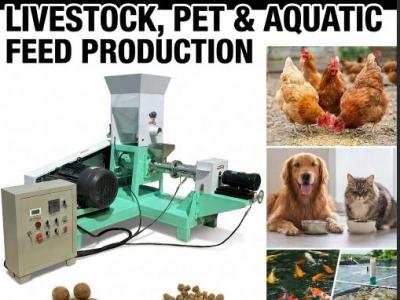
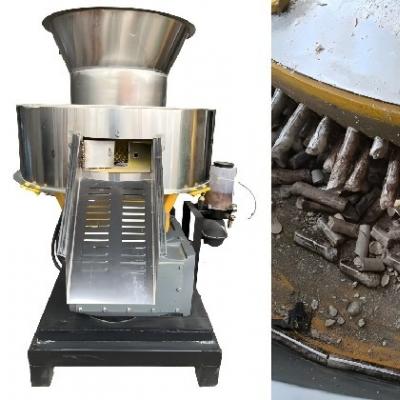
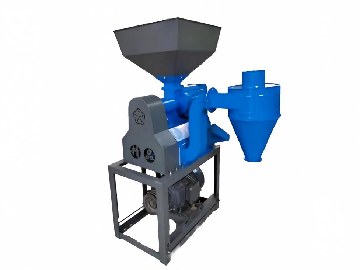
Assume you run the mill one shift (about 8 working hours). Divide your daily feed need by 8 and you get the hourly capacity your machine must deliver. A small backyard flock of 500 layers (~60 kg/day) is covered by a compact 9KLP-150 / 160 producing 60–150 kg/h. 1,000–2,000 birds (~120–240 kg/day) fit a 9KLP-180 / 210 in the 150–300 kg/h range. 5,000 birds (~600 kg/day) call for a 9KLP-230 / 260, and a 10,000-bird house (~1,200 kg/day) needs a 9KLP-300 or a small automated feed pellet line running steadily through the shift. The takeaway: flock size sets the target, and the pellet mill is simply the tool that hits it.
One more reason pellets pay off at scale
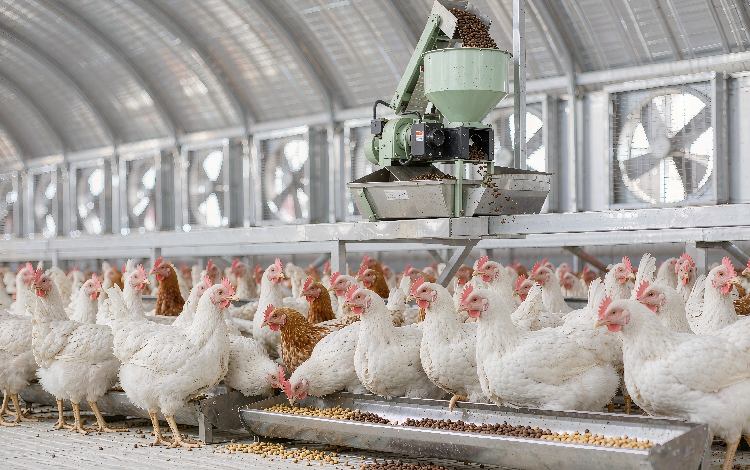
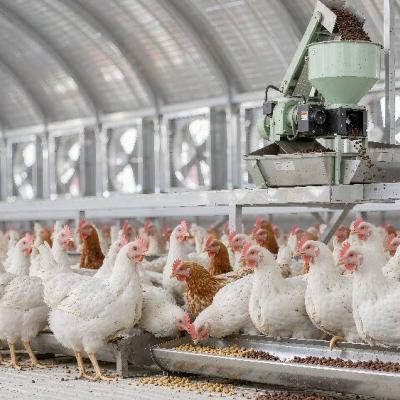
As your flock grows, feeding mash or whole grain gets wasteful — birds sort the good bits, waste rises, and feed conversion drops. Pelleting locks nutrition into a uniform, dust-free form chickens eat completely, which is why larger houses almost always switch to a pellet mill. The photo shows a working poultry house where pelleted feed is delivered straight from a compact pellet machine into the troughs — exactly the loop a growing farm needs. WEIWEI builds the 9KLP flat-die series (60–800 kg/h across models) plus complete feed pellet lines, CE/ISO certified, with spare dies and OEM support for overseas farms.