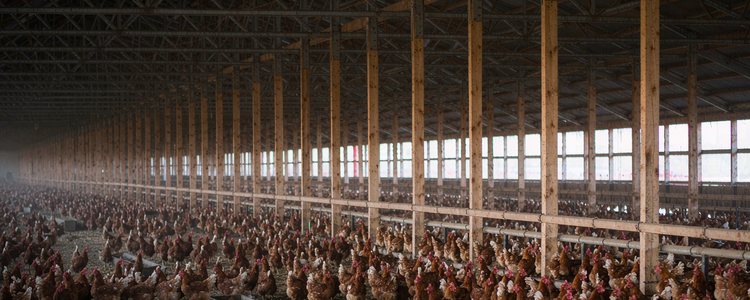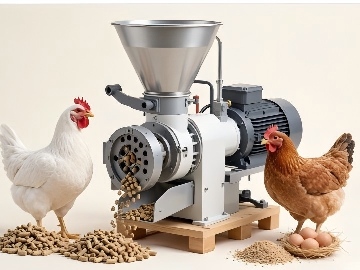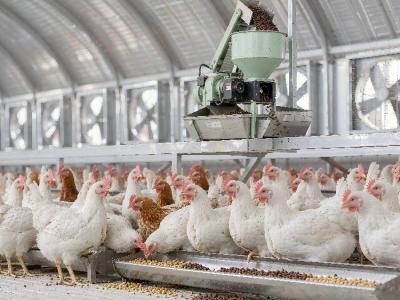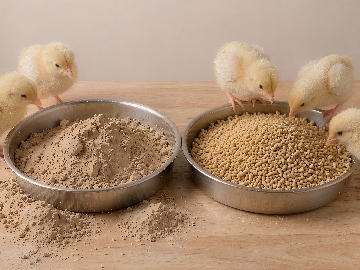

Chicken manure is one of the cheapest raw materials a poultry farm owns, and one of the hardest to sell. Fresh manure leaves the house at 70–80% moisture, smells, and costs more to move than it is worth. Pelleting looks like the obvious answer: dry it, run it through a pellet machine, bag it as fertilizer or fuel. Almost every machine sold for that job is a biomass pellet press — and that is where the trouble starts.
A pellet die is a high-pressure, high-friction place. As the rollers force material through the holes, the die face climbs to 80–120 °C, sometimes higher on a dry, hard feedstock. That heat is exactly what makes a wood pellet bind. It is also what ruins a bio-organic fertilizer. The bacteria and fungi that give manure its value — Bacillus, lactic acid bacteria, actinomycetes, yeasts — are inactivated above roughly 60 °C. Pellets coming off the die are sterile: they still carry nitrogen, phosphorus and organic matter, but the living flora the customer is paying for is gone.
Heat is only the first problem. Moisture has to fall from 70–80% to 12–15% before pelleting, and drying that much water often costs more energy than the pellets are worth. Ash from grit, eggshell and bedding runs 15–25% and grinds the die and rollers, so die life drops from months to weeks. The nitrogen in manure also releases free ammonia, which attacks the die, bearings and paint. The result is crumbly pellets, a worn die, and a product that no longer does what it was sold to do.
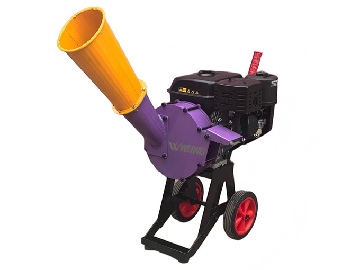
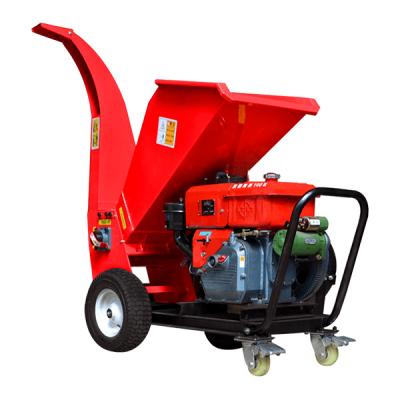
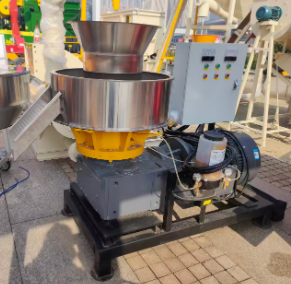
If the goal is organic fertilizer, keep the biology alive. Compost the manure first — a thermophilic heap at 55–65 °C kills pathogens and weed seeds — then cure it, dry it to a workable moisture, and granulate cold with a disc, pan or low-temperature extrusion granulator. Re-inoculate with beneficial microbes after granulation, not before. Weiwei builds biomass pellet mills for wood, sawdust and straw — flat-die SKJ200 at 100–120 kg/h up to the ring-die 1000 at 3–4 t/h — plus the crushers and mixers used before pelleting. Tell us what you want to make, fertilizer or fuel. If a pellet mill is the wrong machine for your material, we will say so.